Leave A Message
If you are interested in our products and want to know more details,please leave a message here,we will reply you as soon as we can.

The future development of the photovoltaic (PV) industry will be defined by sustained high-speed growth in installed capacity, continuous technological breakthroughs, accelerated globalization, and an inevitable industry reshuffle. Overall, the sector is entering a new stage characterized by a favorable market environment, technology-driven growth, and a reshaping of the competitive landscape.
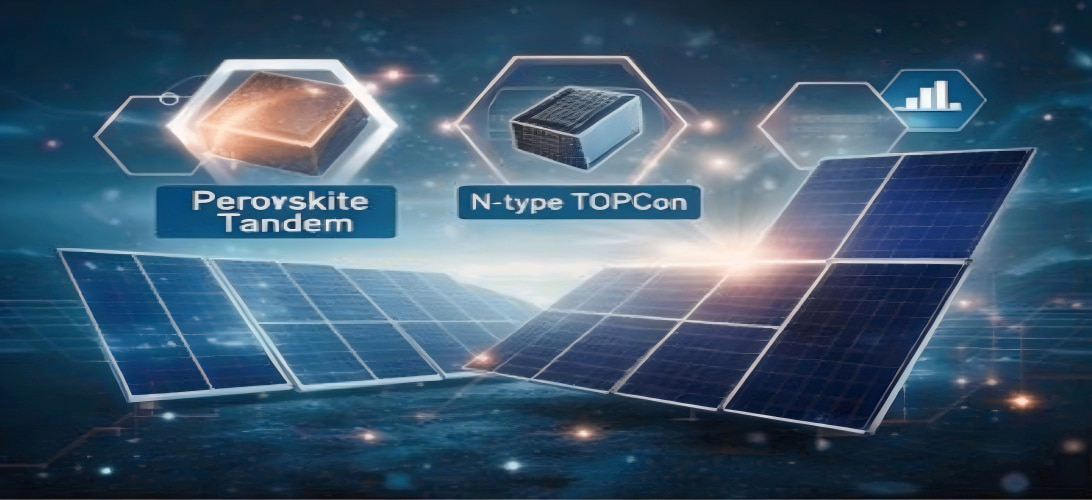
High-efficiency PV technologies—such as perovskite tandem cells and N-type cell technologies—are expected to become mainstream. At the same time, emerging overseas markets will serve as new growth engines, while overcapacity and intense price competition will accelerate the exit of outdated production capacity. The industry is transitioning into a reshuffling phase driven by technology strength and brand influence, with Chinese PV companies deepening their “going global” strategies and building more localized, diversified global supply chains.
The global energy transition and carbon neutrality commitments are continuing to drive strong growth in PV installations worldwide. Demand is expanding across multiple application scenarios, ranging from large-scale ground-mounted power plants to distributed photovoltaic systems in residential, commercial, and industrial settings.
Technological advancement remains the most critical driver of industry development. High-efficiency technologies—represented by N-type TOPCon, HJT, and perovskite tandem cells—are rapidly breaking through efficiency bottlenecks and lowering the levelized cost of electricity (LCOE).
In parallel, system-level innovation is accelerating. Integrated solutions such as PV + energy storage + hydrogen energy, along with intelligent operation and maintenance (O&M), are becoming key development directions, improving system stability, flexibility, and overall energy utilization.
Chinese PV enterprises are speeding up their global expansion, increasing market penetration in emerging regions such as Southeast Asia, Latin America, the Middle East, and Africa. At the same time, companies are actively responding to trade barriers and protectionist measures in Europe and the United States by localizing production, diversifying markets, and optimizing global supply chains to reduce export risks.
Large-scale capacity expansion across the entire PV industry chain has led to oversupply and persistent price declines, significantly compressing profit margins. As a result, the industry is entering a period of deep reshuffling.
In this environment, companies with strong comprehensive capabilities—spanning technological innovation, cost control, brand recognition, and global sales channels—will be better positioned to survive and grow, while less competitive players are likely to be eliminated.

Technological Iteration Pressure: Continuous and substantial R&D investment is required to keep pace with rapid technological upgrades.
International Trade Friction: Tariffs, trade barriers, and geopolitical uncertainties introduce risks to global expansion.
Profitability Challenges: Overcapacity-driven price competition continues to squeeze margins across the value chain.
The photovoltaic industry is transitioning from a phase of rapid growth focused on “quantity” to a new era emphasizing high-quality, sustainable development. Technological leadership, cost efficiency, refined operations, and global market will determine long-term success.
Looking ahead, the industry will be dominated by PV leaders with strong technological advantages, efficient cost structures, and a truly global footprint, marking the beginning of a more mature and resilient stage of industry development.

 IPv6 network supported
leave a message
Scan to Wechat :

Scan to WhatsApp :